
Emerging role of microplastics and nanoplastics in children’s health

Emerging role of microplastics and nanoplastics in children’s health

Plastics are a growing environmental and health threat. Microplastics (MPs, <5 mm) and nanoplastics (NPs, <1 μm) are pervasive environmental contaminants increasingly detected within human tissues, including placenta, cord blood, breast milk, and infant stool, highlighting chronic early-life exposure. Children represent a uniquely vulnerable population due to higher intake relative to body mass, immature detoxification and immune systems, and rapid organogenesis. MPs and NPs (MNPs) can traverse…
Read More
Micro- and Nanoplastics as Emerging Drivers of Liver Injury: Exposure, Evidence, and Mechanisms

Micro- and Nanoplastics as Emerging Drivers of Liver Injury: Exposure, Evidence, and Mechanisms

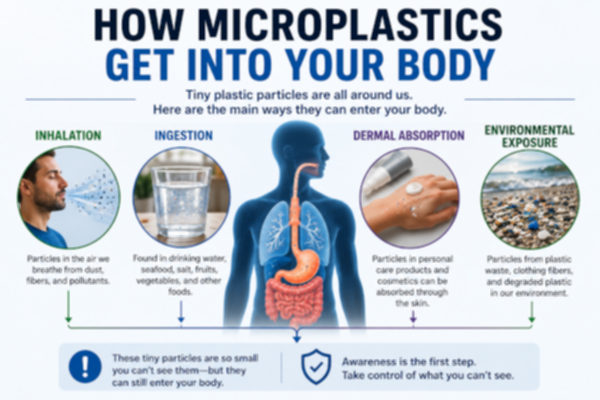
Micro- and nanoplastics (MNPs) are emerging environmental contaminants of increasing relevance to human health. Growing evidence suggests that, following ingestion, inhalation, or, less convincingly, dermal exposure, MNPs may cross biological barriers, enter lymphatic and vascular compartments, and reach the liver. Owing to portal blood flow, sinusoidal architecture and Kupffer cell activity, the liver appears to be one of the principal sites of early particle sequestration. Human biomonitoring,…
Read More
Dietary Intake of Micro- and Nanoplastics: Potential Adverse GI Effects on Microbiome, Inflammation, and Neoplasia

Dietary Intake of Micro- and Nanoplastics: Potential Adverse GI Effects on Microbiome, Inflammation, and Neoplasia

Micro- and nanoplastics (MNPs) are pervasive in food-contact environments and the human diet, positioning the gastrointestinal (GI) tract as the primary portal of entry and a plausible site of early biological effects. Human exposure is supported by detection of microplastics in stool and colon tissue, and emerging clinical studies report associations between fecal microplastic burden and GI disease states, including inflammatory bowel disease (IBD) and colorectal cancer (CRC). Preclinical…
Read More
Micro- and Nanoplastics as Potential Drivers of Dilated Cardiomyopathy

Micro- and Nanoplastics as Potential Drivers of Dilated Cardiomyopathy

Dilated cardiomyopathy (DCM) is a leading cause of heart failure, but up to 50% of cases have no definitive etiology. Genetic susceptibility alone does not account for phenotypic inconsistency, so a ‘two-hit’ model has been proposed to explore the spectrum of gene-environment interactions. Certain triggers, such as alcohol, chemotherapy agents, and viral myocarditis, are well-established second hits in the pathogenesis of DCM. The exposome, which encompasses environmental and social exposures…
Read More
Detection and release characterization of micro-nanoplastics from kitchen plastic products: A review

Detection and release characterization of micro-nanoplastics from kitchen plastic products: A review

Kitchen-derived micro-nanoplastics (M/NPs) have emerged as a potential source of human dietary M/NP exposure, yet their release mechanisms, particle characterization, and associated health risks remain poorly understood. This review systematically summarizes the current research on household kitchen plastic products, categorizing them into cooking auxiliaries, cleaning products, food containers, and others. Among them, plastic food containers are the primary contributors to kitchen-derived M/NP…
Read More
Transcriptomic responses to repeated exposure of human C3A liver spheroids to polystyrene nanoplastics

Transcriptomic responses to repeated exposure of human C3A liver spheroids to polystyrene nanoplastics

Increasing evidence of nanoplastics (NPs) accumulation in the human liver has raised concerns regarding their potential hepatotoxicity. However, current knowledge is largely derived from animal studies or simplistic in vitro models, often with unrealistic exposure scenarios, thereby constraining their relevance to human health. Human liver spheroids have emerged as relevant tools for long-term mechanistic toxicological studies, yet their application to the hepatotoxicity assessment of NPs…
Read More
Polystyrene nanoplastics induce size-associated oxidative-inflammatory stress, hepatic insulin-signaling impairment and metabolic disturbances in normal and diabetic mice

Polystyrene nanoplastics induce size-associated oxidative-inflammatory stress, hepatic insulin-signaling impairment and metabolic disturbances in normal and diabetic mice

CONCLUSIONS: This study suggests that PS-NPs may act as metabolic stressors under the present experimental conditions, with their effects influenced by particle size and host metabolic background. By integrating classical toxicological methods with exploratory computational modeling, our findings provide mechanistic clues and preliminary data-driven evidence that PS-NP exposure may be associated with hepatic insulin-signaling impairment and metabolic disturbance, underscoring the need to assess…
Read More
Nano-plastic contamination in soil: impacts on rhizosphere volatile organic compound (VOC) signaling and rice disease susceptibility-a comprehensive review

Nano-plastic contamination in soil: impacts on rhizosphere volatile organic compound (VOC) signaling and rice disease susceptibility-a comprehensive review

Polyvinyl chloride nanoplastics (PVC-NPs) are emerging pollutants that pose a significant threat to agricultural soils, where they may disrupt rhizosphere volatile organic compound (VOC) signaling and intensify rice blast disease caused by Magnaporthe oryzae. The widespread use of PVC-NPs may result in their accumulation in rice-cultivated soils, where their physicochemical properties interfere with and adversely affect the soil microbial communities and root physiology. Evidence from recent…
Read More
Enzyme-functionalized electrochemical sensor for unified quantification of multiple bioabsorbable nanoplastic types in human urine

Enzyme-functionalized electrochemical sensor for unified quantification of multiple bioabsorbable nanoplastic types in human urine

Nanoplastics pose emerging health risk, yet no existing analytical method can quantitatively detect sub‑300 nm nanoplastics in human urine, mainly due to insufficient sensitivity and polymer-dependent limitations. Here, we report a catalase (CAT)‑based electrochemical sensing platform that enables the first quantitative detection of sub‑300 nm nanoplastics in human urine. The sensor leverages a nanoplastic‑induced structural perturbation mechanism, in which hydrophobic‑dominant and…
Read More
Mitochondria at the crossroad: Mechanisms of nanoplastic-induced neurotoxicity and brain accumulation

Mitochondria at the crossroad: Mechanisms of nanoplastic-induced neurotoxicity and brain accumulation

Widespread environmental contamination with nanoplastics (NPs) poses a significant risk to human health, particularly their accumulation in the central nervous system (CNS). This review examines how NPs can breach biological barriers, including the blood-brain barrier (BBB), olfactory system, and gut-brain axis, to access the brain. After their uptake by neurons through endocytosis, NPs primarily accumulate in the mitochondria, triggering cascades of neurotoxic changes in the brain. Existing…
Read More